Deciding where to live isn’t just about square footage or floor plans—it’s about evaluating the ecosystem you’ll inhabit every day. If you are considering a move to the Ann Arbor area, you’ve likely encountered the standard tourism brochures: the University of Michigan’s dominance, the football stadium, and the generic lists of “top restaurants.”
But for the discerning resident—someone looking for a permanent home rather than a weekend getaway—the reality of Ann Arbor is far more nuanced. It is a city of distinct rhythms, where high-level academia clashes beautifully with a “Keep Ann Arbor Weird” counter-culture.
This guide moves beyond the surface-level tourism highlights to provide a functional evaluation of the local lifestyle. We’re looking at how the culture, recreation, and events schedule actually impacts your daily life, helping you decide if this community aligns with the lifestyle you are building.
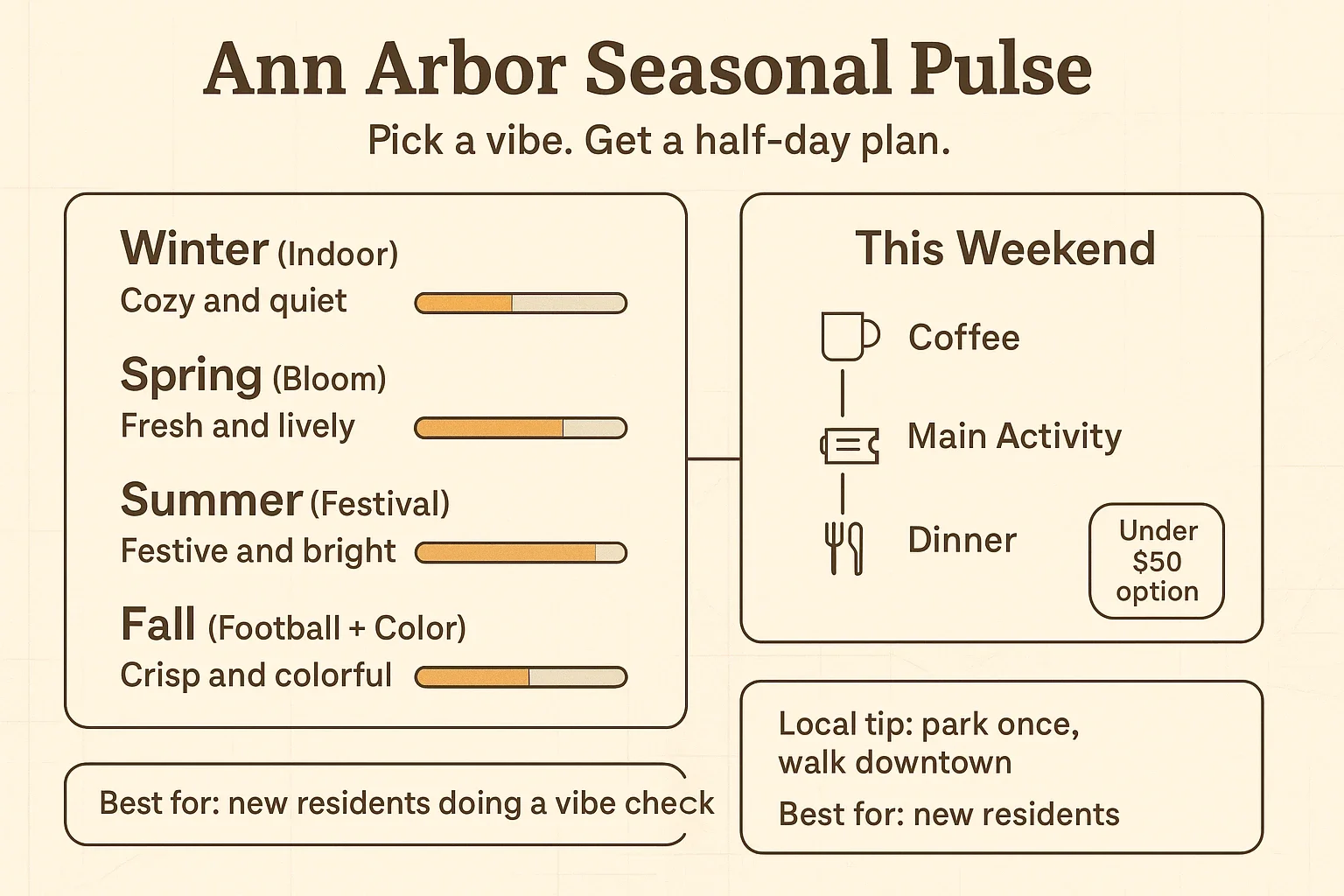
The Seasonal Pulse: Living Beyond the Semester
One of the first things a prospective resident must understand is the “Student-Resident Friction.” With approximately 32% of the population falling into the 18–24 demographic due to the university, the city has two distinct modes: the high-energy academic year and the serene, community-focused summer.
Understanding this rhythm is crucial for planning your lifestyle. While the downtown area buzzes with energy, communities just outside the immediate campus bubble—like Whitmore Lake—offer the ability to access that culture without being beholden to the student calendar.
The Summer Transformation
When the students depart in May, the city transforms. This is when “Tree Town” lives up to its name. The pace slows, and the focus shifts to community-wide events. The headline event is, of course, the Ann Arbor Art Fair, which draws nearly 500,000 visitors in July. For a resident, this isn’t just an art show; it’s a massive logistical event. The strategic move for locals is often to enjoy the festivities early on Thursday morning or use that weekend to enjoy the quiet of their private patios and community green spaces, avoiding the downtown gridlock entirely.
The “Townie” Winter
Winter in Washtenaw County is where community bonds are forged. While the grey skies can persist, the cultural calendar remains vibrant. The Ann Arbor Folk Festival is a prime example of high-caliber cultural programming that happens indoors. Residents here don’t hibernate; they transition to “cozy culture”—bookstores like Literati, independent films at the Michigan Theater, and warm, energy-efficient gatherings at home.
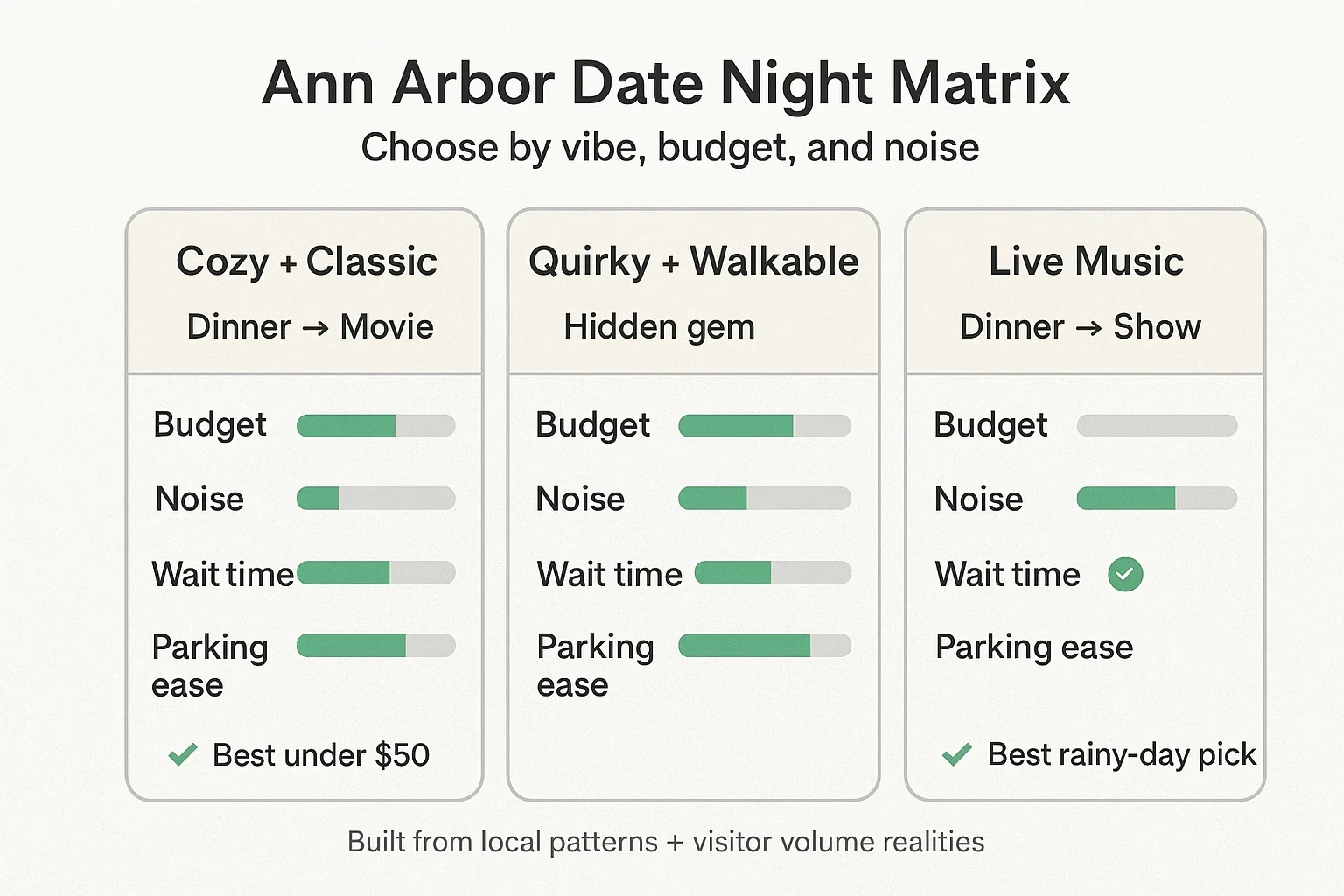
The Culinary & Social Scene: A Curated Evaluation
Ann Arbor’s median household income sits above $81,000, creating a market for what we call “Affordable Luxury.” You aren’t just looking for dinner; you are looking for a friction-free evening workflow.
The challenge in Ann Arbor isn’t a lack of options; it’s navigating the logistics of popularity. A “Best of” list won’t tell you that a specific restaurant has a two-hour wait with no standing room.
The “Dinner and a Show” Workflow
For a seamless evening, location clustering is key.
The State Street Corridor: Dinner at Mani Osteria (reservations essential) followed by a show at the State Theatre requires minimal walking.
The Kerrytown Detour: A quieter, more sophisticated vibe. Start with drinks at The Last Word (a speakeasy vibe without the pretension) and move to Zingerman’s Roadhouse for high-end comfort food.
This variety allows residents to curate their experiences based on energy levels. Whether you want the bustle of Main Street or a quiet evening near the water, the region accommodates both—provided you have the personal transportation (a two-car garage is a major asset here) to navigate between them.
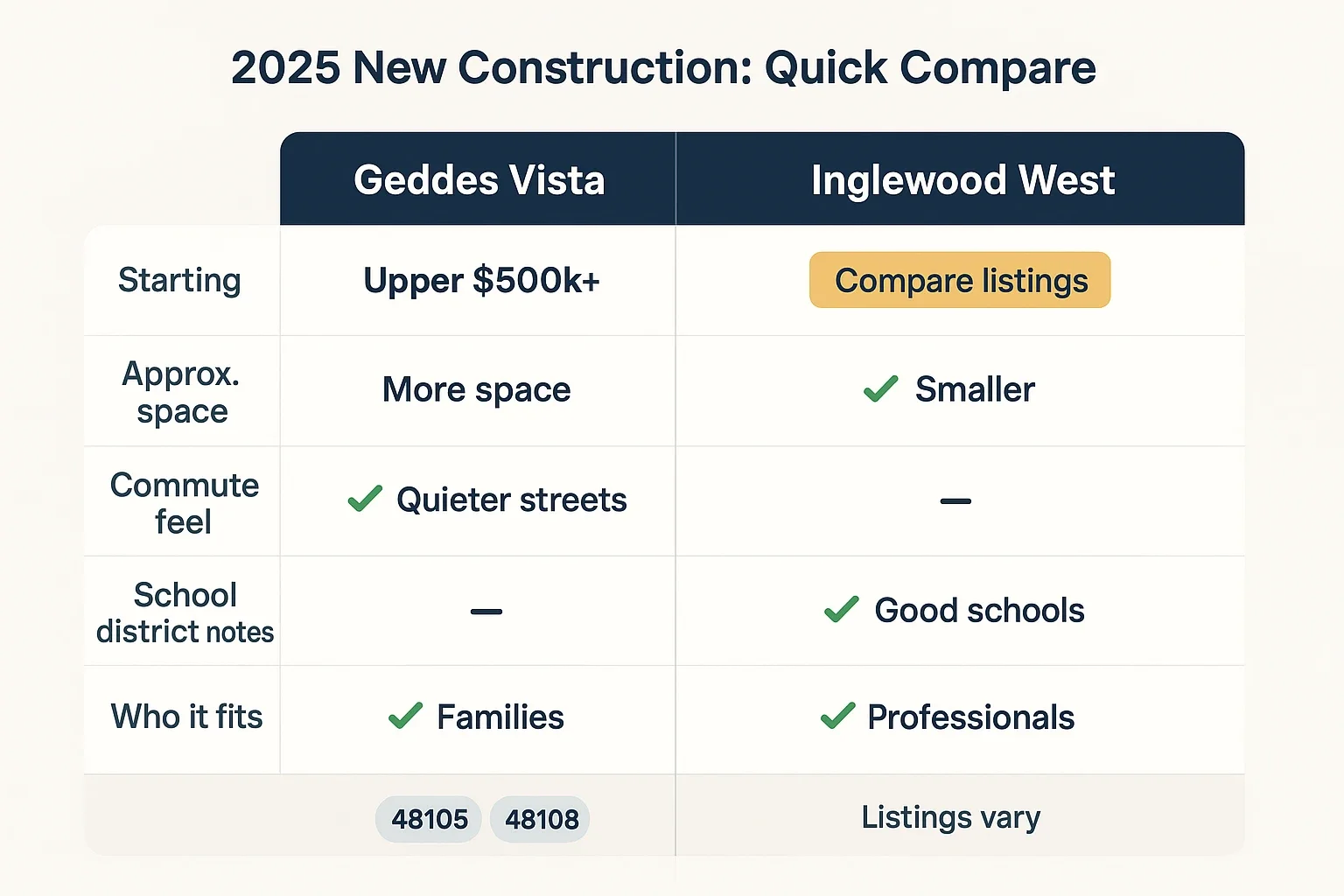
Phase 3: Financial Calibration & Cost of Living
Understanding the local economy is vital for your peace of mind. Ann Arbor and its surrounding townships (like Whitmore Lake) have a distinct economic microclimate compared to the rest of Michigan.
Recent market analytics and MIT Living Wage data suggest that to live “comfortably” in the Ann Arbor area in 2024-2025—meaning you can afford housing, utilities, transportation, and savings without stress—a single adult needs a salary benchmark between $80,000 and $90,000.
The Hidden Costs
When budgeting, many residents account for rent but forget the “efficiency factor.” Older homes in downtown Ann Arbor may have charm, but they often lack insulation, leading to winter heating bills that can exceed $300/month.
This is where the value of energy-efficient construction becomes tangible. Homes built with 2×6 framing, closed-cell foam insulation, and Energy Star-rated appliances—standard features at communities like Chestnut Hills—can drastically lower that monthly overhead, effectively putting money back into your pocket.
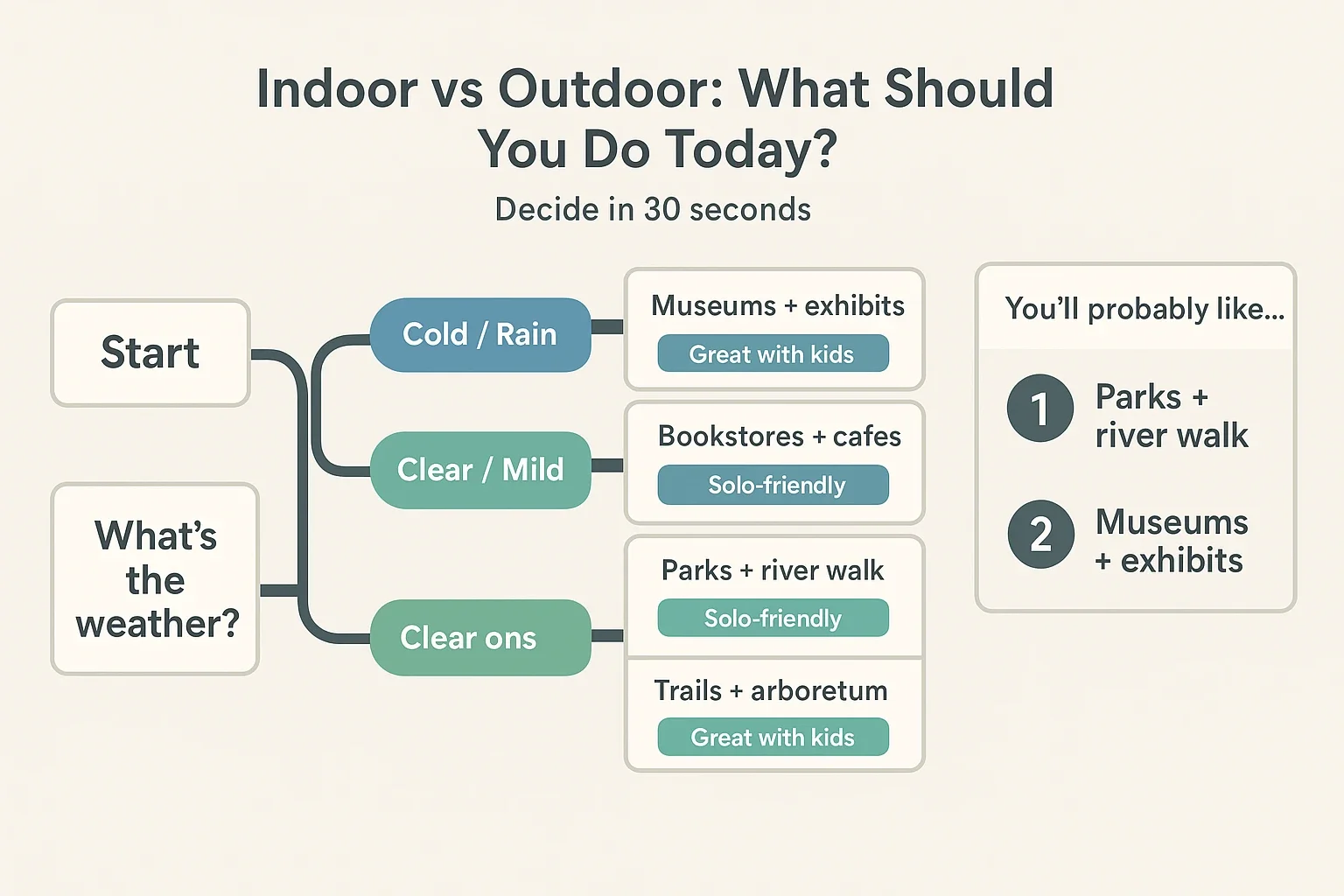
Family & Recreation: Navigating the Weather
One of the most common questions prospective residents ask is: “What do we do when the weather turns?” Michigan weather is variable, and your home needs to be a sanctuary, but your community needs to offer an escape.
The decision to go out often hinges on a simple “Indoor vs. Outdoor” decision tree.
The Outdoor Ecosystem
When the sun is out, the Gallup Park and Matthaei Botanical Gardens are standard recommendations, but the Nichols Arboretum (The Arb) offers a more rugged, immersive nature experience that feels miles away from the city. For residents at Chestnut Hills, the local green spaces and personal patios provide that immediate connection to nature without the drive.
The Indoor Pivot
When the Great Lakes wind picks up, the city’s infrastructure shines. The Ann Arbor Hands-On Museum is a regional draw for families, while the University of Michigan Museum of Art (UMMA) offers a quiet, contemplative space that rivals museums in much larger cities.
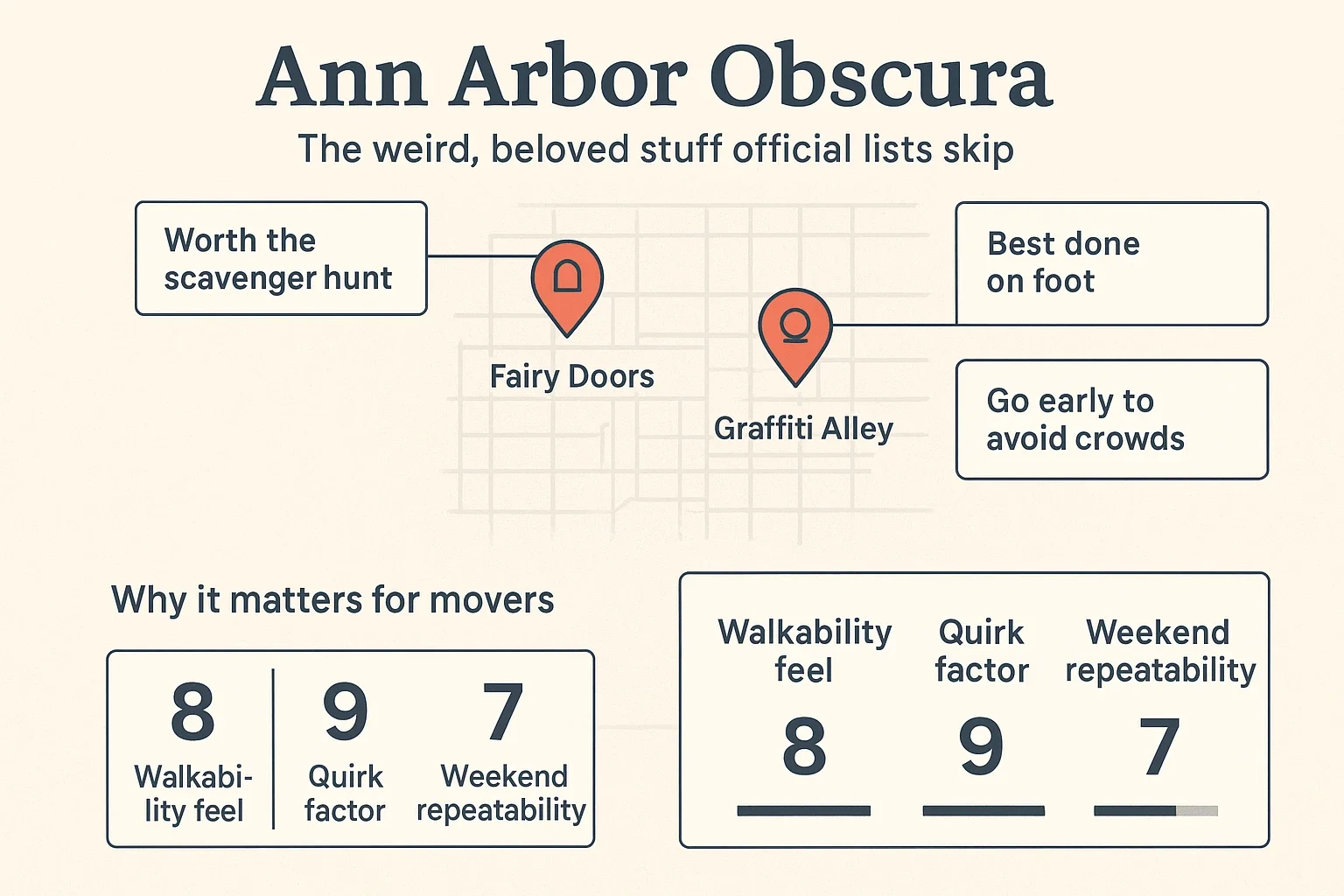
The “Ann Arbor Obscura”: Why Weird is a Feature
Perhaps the most significant differentiator of the Ann Arbor lifestyle is its embrace of the unusual. This isn’t a cookie-cutter suburb; it is a town with a distinct personality. For those relocating from major metros, this “weirdness” is often a primary attraction—it signals a community that values character over conformity.
Fairy Doors: Since 2005, these miniature doors built into local businesses have created an ongoing city-wide scavenger hunt. It’s a small detail, but it speaks to a walkable, engaged downtown.
The Wave Field: Hidden behind the aerospace engineering building, this earthen art installation is a favorite “secret” spot for locals reading a book or letting kids run off energy.
Graffiti Alley: Located off East Liberty, this ever-changing canvas is a testament to the city’s support for public art and expression.
These elements—the quirky, the artistic, the unexpected—are what transform a location from a “place to live” into a “community.”
Finding Your Place in the Ecosystem
Evaluating Ann Arbor comes down to balancing access with comfort. You want the culture—the film festivals, the culinary diversity, the intellectual hum—but you may not want the parking headaches or the drafty, century-old housing stock that characterizes downtown rentals.
This is where the Chestnut Hills proposition gains clarity. By positioning yourself just minutes from the action in Whitmore Lake, you gain the “best of both worlds” scenario:
Access: Direct routes to downtown Ann Arbor for the “Date Night Workflow.”
Sanctuary: A return to a single-story, energy-efficient home that creates a quiet buffer against the university bustle.
Community: A neighborhood that prioritizes durability and comfort, aligned with the same values of sustainability found in the broader Ann Arbor culture.
Frequently Asked Questions
Q: Is the “Student-Resident Friction” a major issue for non-students?
A: Generally, no, provided you choose your neighborhood wisely. Living downtown near campus guarantees noise and traffic. Communities like Chestnut Hills offer a buffer, allowing you to “visit” the energy of the university without living inside it.
Q: How accessible is the Ann Arbor culture from Whitmore Lake?
A: It is a short, direct drive. The advantage here is the Direct Access Two-Car Garage. In the winter, being able to drive into a warm car and head downtown for dinner makes the culture significantly more accessible than if you were relying on street parking or public transit.
Q: Are there year-round activities for adults?
A: Absolutely. Beyond the restaurant scene, Ann Arbor has a thriving adult recreation culture, including rec sports leagues, makerspaces, and continuing education programs through the local colleges.
Q: What is the “hidden cost” of the Ann Arbor lifestyle?
A: Parking and housing efficiency. Downtown parking can be pricey, and older A2 homes often come with high utility bills due to poor insulation. Choosing a modern, Energy Star-rated home helps offset the cost of living by significantly reducing monthly utility expenses.
—
Ready to experience the Ann Arbor lifestyle with a foundation of modern comfort? Explore how Chestnut Hills offers the perfect launchpad for your local adventures.
Leave a Reply
Your email address will not be published.